English Conversation Cafés transform international student experience at University of Reading
February 25, 2026

5 minute read:
Exploring how the University of Reading’s English Conversation Cafés help international students build confidence, how the initiative began, the importance of peer facilitators and practical advice for institutions starting similar programmes.
Building confidence is key to academic success. For international students, thriving at university means feeling connected, supported and confident, not only in the classroom, but beyond it.
The University of Reading’s English Conversation Cafés offer relaxed, peer-led spaces where international and home students come together to practise spoken English, build confidence and form intercultural connections. By providing low-pressure opportunities to use academic language in real conversations, the Cafés complement formal study, strengthen classroom participation and enhance students’ overall experience of studying in the UK.
Their model aligns with the principles of the UKCISA’s #WeAreInternational Student Charter, creating a welcoming, inclusive, and equitable environment for international students. This impactful approach earned the team the Outstanding Student Support (Academic Experience) #WeAreInternational Award.
How it began: responding to student need
The English Conversation Cafés grew from Reading’s historical pre-sessional English ‘Conversation Club’. As the Global Study Lounge was being developed the team noted a clear need from students and staff across the university for a low-risk space and co-/extracurricular activity for students to practise their spoken English, developing confidence and allowing them to fully participate in formal provision.
The cafés were established to meet that need, becoming sustainable real-world forums for informal language development and intercultural learning, complementary to their studies, shaping globally engaged students.
Daniel Devane, Director of Global Study Lounge, and Corinne Brookes, International Student Experience Manager, explained:
“You can see students becoming noticeably more fluent and willing to speak, both in the cafés and in their academic classes. They also develop a stronger sense of belonging and intercultural understanding, whilst peer facilitators gain leadership and communication skills.”
The cafés are structured around core topics aligned to the university calendar. Participants are given ‘guiding questions’ to aid conversation. Facilitators grade these against the Common European Framework of Reference (CEFR) for Languages to ensure everyone is able to participate, regardless of language level.
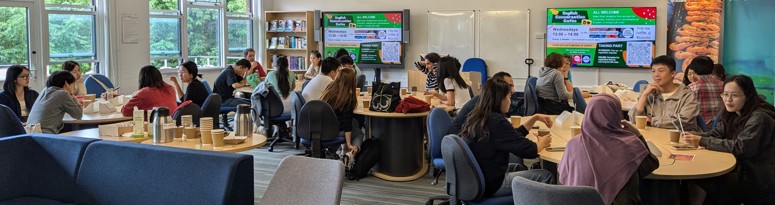
Cross-collaboration
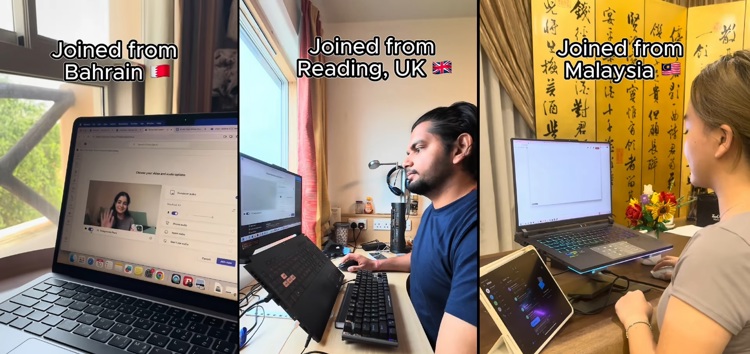
The cafés thrive through non-hierarchical collaboration. Students and facilitators from different academic, cultural, and institutional contexts enrich discussion and make intercultural exchange more authentic.
This collaboration also allows the cafés to run in two modes, in-person and online, allowing students to discover their global Reading community.
Educationally, students benefit from networking beyond their own social bubbles, gaining confidence communicating and making connections with unfamiliar peers, much closer to real-world interactions and English use.
Peer support: the role of student facilitators
As the team explained to us:
“Whilst staff provide support, students primarily seek peer interaction.”
Student facilitators help unite groups, guide discussions, and encourage participation in ways staff cannot.
They’ve taken on a leading role in promotion and session design, from creating videos and facilitating discussions to shaping the cafés from a student perspective.
Advice for other institutions
The English Conversation Cafés team shared these top five tips for those wanting to start similar initiatives:
- Build partnership, not ‘provision’
Treat the activity as a shared space co-created by students, facilitators, and partners, to avoid deficit-framing and encourage participation.
- Invest in peer facilitators
They don’t need to be experts, but they do need confidence in managing inclusion, supporting participants, and sensitively handling intercultural differences.
- Maintain a low-pressure and social environment
Simple themes, prompts, and flexibility help sessions respond to students’ interests.
- Intentionally embed collaboration
Clear communication between stakeholders, shared values, and agreed practical arrangements make collaboration locally and globally sustainable.
- Value all impact
Belonging, confidence, intercultural competence and peer connection are all transformative outcomes and deserve recognition.
The impact: a student story
One postgraduate student attended every café and surrounding activity in the Global Study Lounge. Initially quiet and hesitant, he gradually gained confidence, began to interact with others and saw his English improve dramatically.
After graduating, he sent an email reflecting on his time at the university and how meaningful the cafés had been throughout his journey and invited the team to visit him in China. He said:
"These days I occasionally recall the pleasant and harmonious times we spent together [at the] conversation café".
Find out more at the #WeAreInternational campaign, including the Student Charter and upcoming 2026 Awards.
Connect with peers and learn about how they are supporting international students at the UKCISA Annual Conference 2026, 23-25 June in Glasgow.